
To choose the correct motor for your project, you must weigh the continuous speed and cost-efficiency of a DC motor against the open-loop positional precision of a stepper motor, or the high-torque, closed-loop feedback of a servo motor. Engineers often face the nightmare of selecting a motor drive only to find it stalls under load, lacks holding torque, or blows the project budget during prototype testing. This failure leads to missed product launch deadlines, endless debugging hours, and mounting frustration among your stakeholders. Fortunately, integrating a precision-engineered dc gear motor from a reliable manufacturer can resolve these dynamic torque and speed challenges while keeping your system design highly efficient and cost-effective.
How do DC, stepper, and servo motors compare overall?
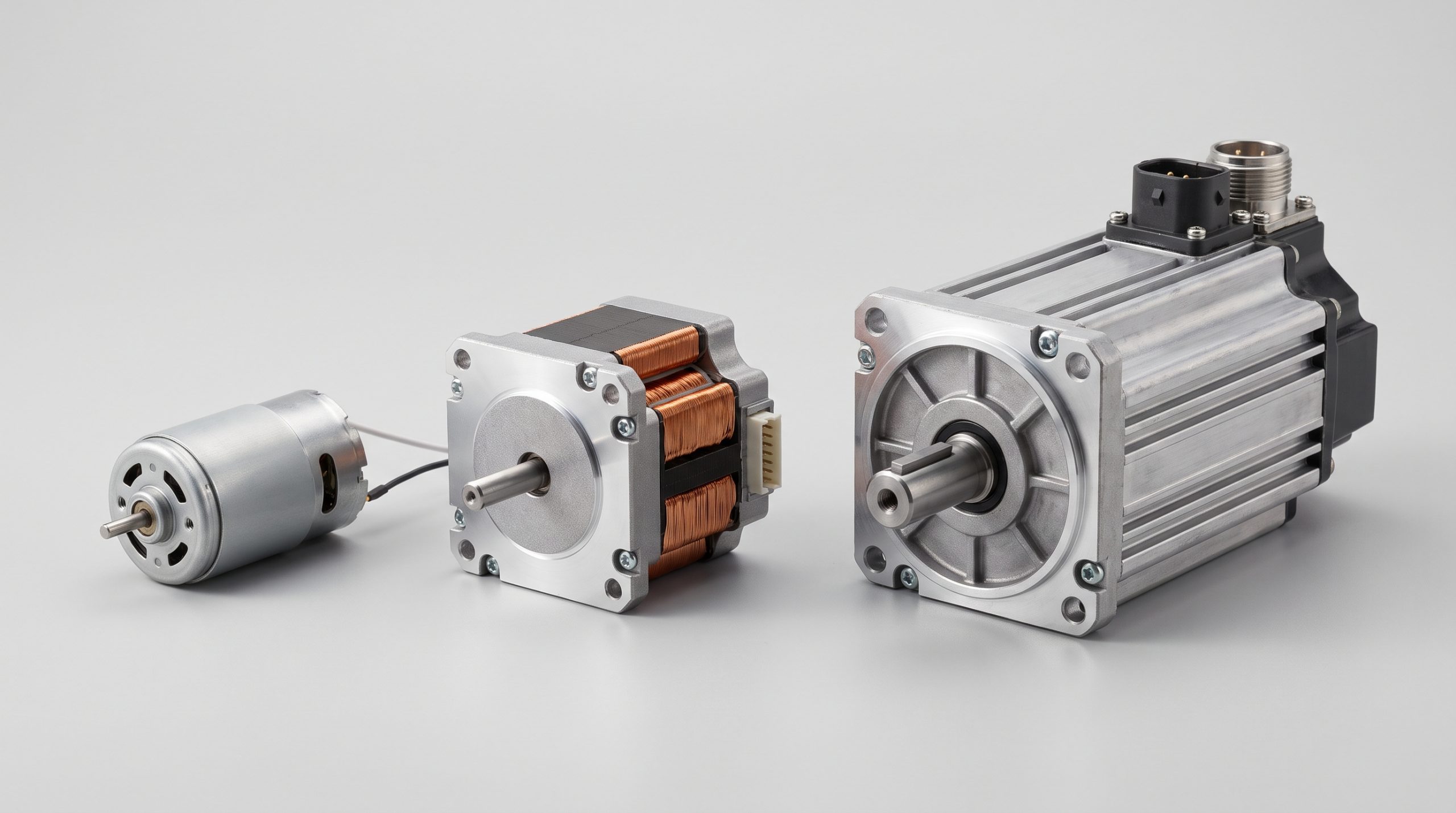
Choosing between DC, stepper, and servo motors depends entirely on your project’s specific balance of speed, torque, and positioning precision. While a simple dc gear motor excels at continuous high-speed rotation, stepper motors are designed for open-loop incremental positioning, and servo motors provide high-torque, closed-loop precision. Understanding these core differences ensures you select the optimal drive mechanism for your industrial application.
What are the fundamental working principles?
Consider this: the internal physics of each motor type dictate how they perform under load. A DC motor relies on continuous electromagnetic attraction, whereas a stepper motor moves in discrete angular steps using magnetic poles. Meanwhile, a servo motor uses active sensor feedback to constantly adjust its position and maintain accuracy.
Which motor offers the best value?
Determining the best value requires evaluating your budget alongside your performance requirements. Stepper motors are highly cost-effective for static positioning, while servo systems represent a premium investment for dynamic, high-speed accuracy. Conversely, DC gear designs offer the most economical option for continuous rotation tasks.
- DC motors: Best for simple, continuous, high-speed rotation.
- Stepper motors: Best for low-speed, precise angle control without feedback.
- Servo motors: Best for high-speed, dynamic closed-loop positioning.
Key Takeaway: For B2B buyers, balancing initial procurement costs against the long-term system complexity of your motor drive is crucial for project profitability.
| Motor Type | Control Type | Cost Level | Best Use Case | |
|---|---|---|---|---|
| DC Motor | Open-Loop | Low | Continuous Rotation | |
| Stepper | Open-Loop | Medium | Static Positioning | |
| Servo | Closed-Loop | High | Dynamic Precision |
Analysis Guidance: Review this comparison to determine whether your system requires feedback loops or simple continuous rotation.
What is the difference between brushed and brushless DC motors?
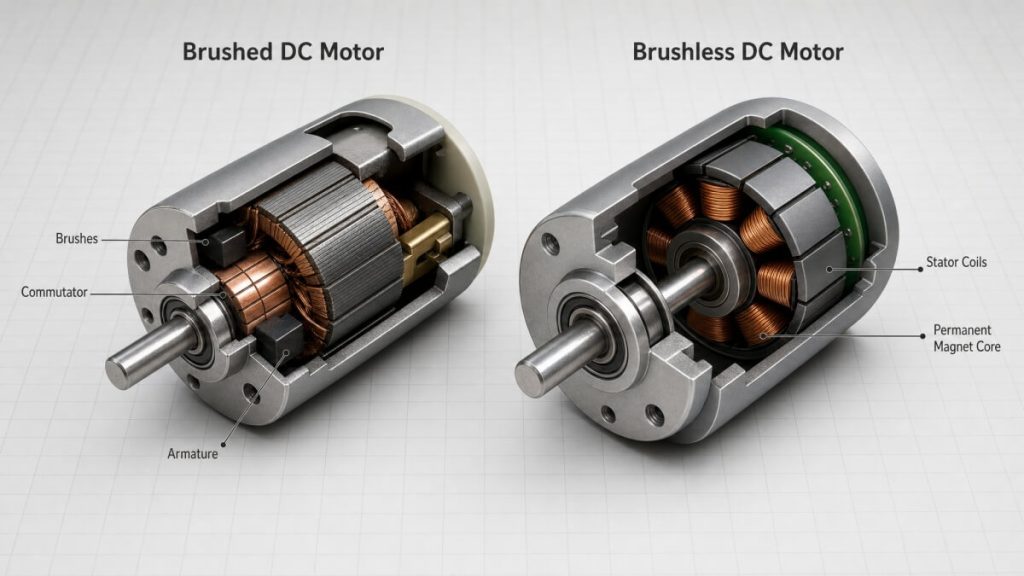
The primary difference between brushed and brushless DC motors lies in their commutation method, where brushed motors use physical carbon brushes and brushless motors rely on electronic controllers. This architectural distinction directly impacts the operational lifespan and maintenance requirements of your selected dc gear motor system. While brushed models offer lower upfront costs, brushless alternatives provide significantly higher efficiency and durability.
How do physical brushes impact durability?
Think about this: friction from mechanical brushes causes inevitable wear and tear over time. This friction generates carbon dust and electrical noise, which can degrade sensitive industrial environments. As a result, systems requiring continuous, long-term operation benefit greatly from brushless configurations.
Why choose brushless for modern projects?
Modern engineering projects increasingly specify brushless motors due to their superior thermal efficiency and speed control. Because they lack mechanical contacts, they run cooler and can sustain higher RPMs without risk of overheating. This makes them ideal for compact, high-performance automated assemblies.
- Brushed motors: Simple drive circuits, lower cost, mechanical wear.
- Brushless motors: Electronic speed control, zero brush wear, higher efficiency.
Key Takeaway: Investing in brushless technology reduces long-term maintenance overhead, which is a major cost driver in B2B automation.
| Motor Type | Commutation | Lifespan | Electrical Noise | |
|---|---|---|---|---|
| Brushed DC | Mechanical | Moderate | High | |
| Brushless DC | Electronic | Very High | Extremely Low |
Analysis Guidance: Analyze your project’s maintenance budget to choose between lower initial cost or extended operational lifespan.
How do stepper motors achieve high-precision positioning?
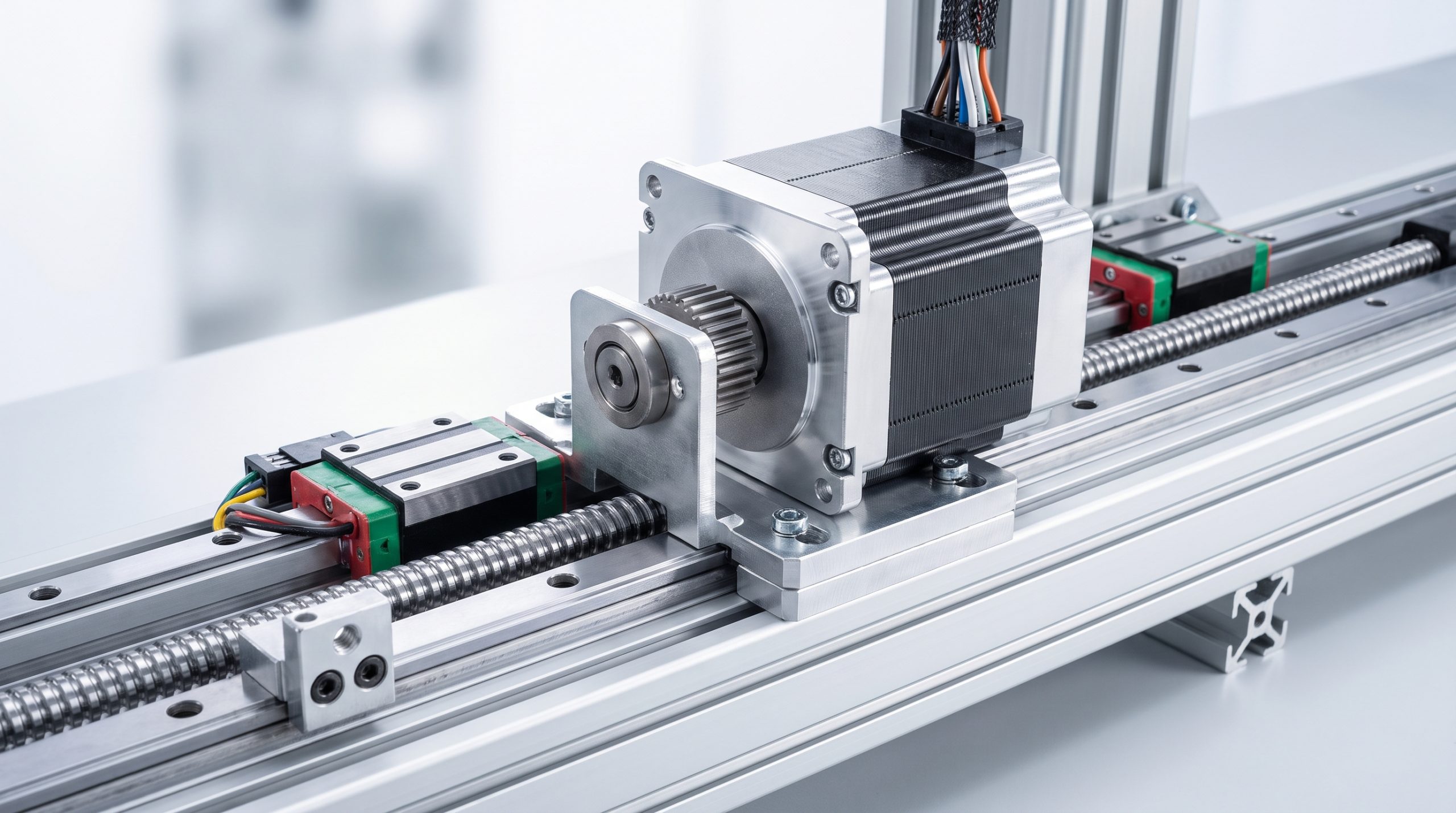
Stepper motors achieve high-precision positioning by dividing a full 360-degree rotation into a series of equal, discrete angular increments called steps. Unlike a standard dc gear motor that rotates continuously, a stepper motor moves incrementally and holds its position firmly without an encoder. This makes them highly effective for applications requiring repeatable, open-loop angular control.
What are hybrid stepper motors?
Here is why this matters: hybrid stepper motors combine the best features of variable reluctance and permanent magnet motors. They utilize a multi-toothed rotor to achieve incredibly small step angles, typically 1.8 degrees per step. This mechanical precision allows engineers to achieve sub-millimeter accuracy without expensive sensors.
When is open-loop control sufficient?
Open-loop control is ideal for predictable loads where external forces are unlikely to stall the motor. Since the controller assumes the motor executes every step, it eliminates the need for complex feedback wiring. This simplifies the control architecture and reduces overall hardware costs.
- Step Angle: Typically 1.8° or 0.9° for high resolution.
- Holding Torque: High torque at zero speed to lock position.
- Open-Loop: No sensor required, reducing hardware complexity.
Key Takeaway: Open-loop stepper motors deliver precise static positioning at a fraction of the cost of servo systems, provided the load remains stable.
| Parameter | Stepper Motor Standard | B2B Value Proposition | |
|---|---|---|---|
| Accuracy | Highly repeatable | Eliminates encoder costs | |
| Feedback | None (Open-Loop) | Simplifies wiring and design | |
| Cost | Low to Medium | High ROI for stable loads |
Analysis Guidance: Examine your system’s load predictability to determine if open-loop stepping is the right choice.
How do servo motors provide closed-loop feedback control?
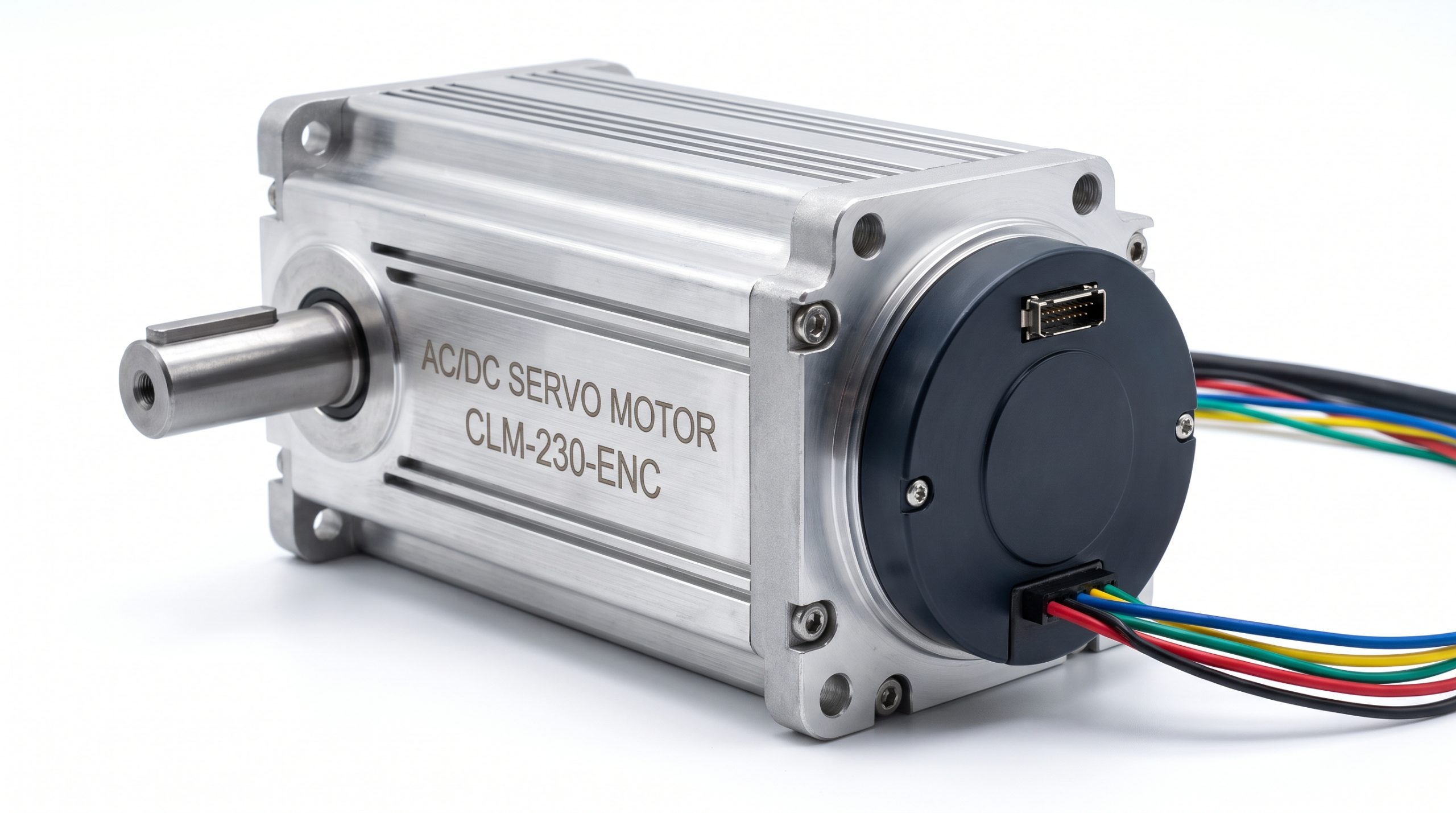
Servo motors provide closed-loop feedback control by continuously monitoring their rotational position via an integrated encoder and adjusting current to correct errors. While a standard dc gear motor runs open-loop without speed verification, a servo system compares real-time output against the target command. This dynamic feedback loop guarantees absolute accuracy and prevents step loss under variable load conditions.
Why does feedback prevent errors?
Let’s dive deeper: the integrated rotary encoder reads the shaft’s actual position thousands of times per second. If an external force slows the rotor, the servo drive immediately increases current to maintain speed. This real-time correction eliminates positioning errors, making servos indispensable for safety-critical systems.
Are servo systems worth the investment?
Evaluating whether to invest in servo systems requires assessing your project’s speed and dynamic response needs. Servos excel at high-speed, high-torque applications where abrupt load changes occur frequently. Although the initial cost is higher, the superior reliability and throughput justify the B2B investment.
- Continuous Feedback: Closed-loop control prevents positional drift.
- Dynamic Torque: Maintains high torque throughout the speed range.
- High Efficiency: Only consumes current required to match load.
Key Takeaway: Closed-loop servo motors offer unmatched reliability for high-speed, dynamic applications where error-free operation is mandatory.
| System Component | Functional Role | B2B Benefit | |
|---|---|---|---|
| Rotary Encoder | Real-time position tracking | Prevents step loss | |
| Servo Drive | Dynamic current adjustments | Optimizes power efficiency | |
| Closed-Loop | Automatic error correction | Minimizes system downtime |
Analysis Guidance: Assess your tolerance for positional errors to decide if closed-loop servo control is necessary.
What are the key torque and speed differences across these motors?
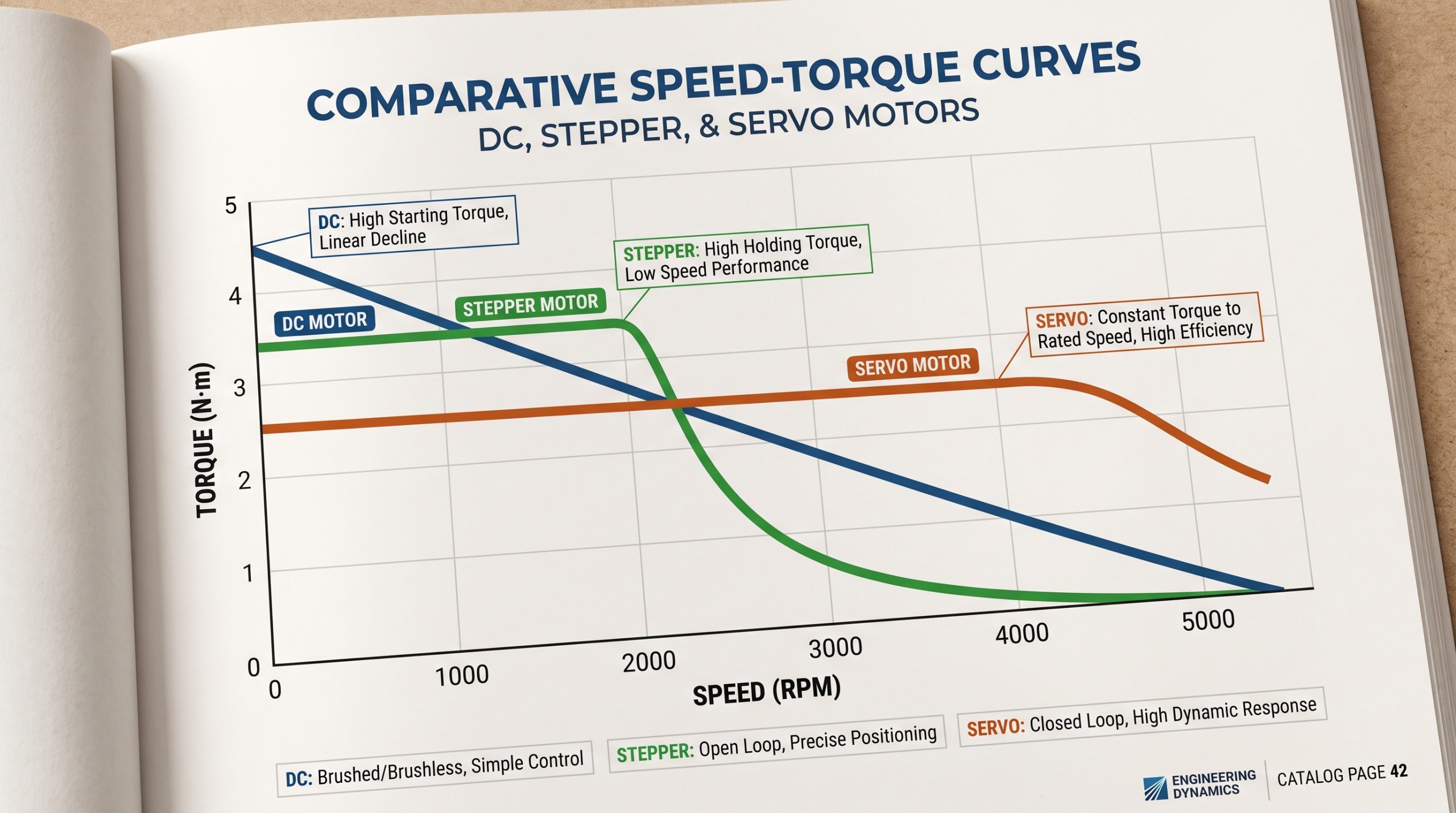
The key differences in torque and speed across these motor types are that DC motors provide linear speed-torque control, stepper motors deliver high holding torque at low speeds but drop off rapidly, and servo motors maintain constant high torque across a wide speed range. Selecting a specific dc gear motor is often ideal for consistent speed under steady loads, whereas stepper motors excel in slow, high-torque positioning. Meanwhile, servo systems are optimized for high-speed dynamic torque requirements.
How do torque curves differ?
Consider this: a stepper motor’s torque is highest at zero RPM and decreases significantly as speed increases. If you try to run a stepper motor at high speed, it may stall or lose steps easily. On the contrary, a servo motor maintains its rated torque steadily up to its maximum rated speed.
Which motor performs best at high speed?
Servo motors and high-quality DC gear systems are the undisputed leaders in high-speed industrial applications. Stepper motors are structurally limited because their electromagnetic coils must switch rapidly, which induces high impedance and reduces torque. Consequently, high-speed automated machinery almost exclusively utilizes servo or DC-based propulsion.
- DC Motors: Linear relationship between speed and voltage.
- Stepper Motors: High holding torque, steep drop-off at high RPM.
- Servo Motors: Constant torque up to high speed thresholds.
Key Takeaway: Matching the motor’s speed-torque curve to your specific application’s load profile prevents motor stalling and system inefficiencies.
| Motor Type | Max Torque Speed | High Speed Performance | Stall Behavior | |
|---|---|---|---|---|
| DC Motor | Low RPM (Starts high) | Good | Slowly decelerates | |
| Stepper | Zero RPM (Holding) | Poor | Stalls instantly | |
| Servo | Constant across range | Excellent | Corrects automatically |
Analysis Guidance: Compare your operating speed requirements against these performance curves to select the right drive.
Where are these motors used in modern industrial automation?
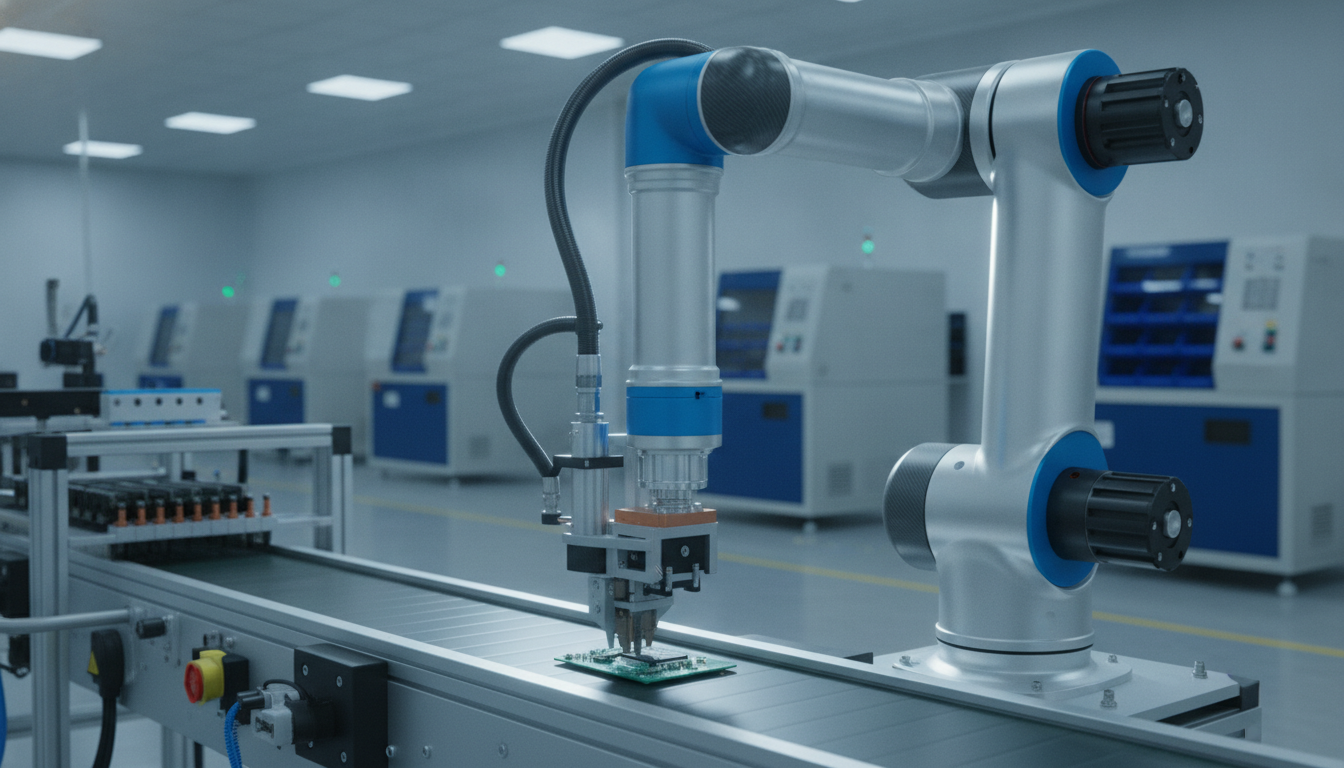
In modern industrial automation, these motors are deployed across distinct applications: DC motors power continuous conveyor belts, stepper motors drive precise 3D printers, and servo motors actuate dynamic multi-axis robotic arms. Incorporating a robust dc gear motor into your manufacturing line ensures reliable, cost-effective, and steady continuous material handling. Choosing the correct motor type for each automated cell optimizes production throughput and minimizes energy consumption.
What powers pick-and-place robotics?
Here is why this matters: pick-and-place robotic arms require rapid acceleration and absolute spatial precision to handle delicate electronic components. Servo motors are the industry standard here because their feedback loops allow for instantaneous position adjustment. This ensures the robot placement tool hits its target coordinate perfectly every single time.
How do 3D printers utilize steppers?
3D printers utilize stepper motors because they need to move the extruder incrementally along the X, Y, and Z axes. Since the print head’s mass is constant and predictable, open-loop stepper motors provide precise layer alignment without the expense of encoders. This mechanical simplicity makes desktop and industrial 3D printers highly affordable.
- Continuous Conveyors: Best served by DC gear systems.
- 3D Printers & CNCs: Powered by high-precision stepper motors.
- Robotic Joints: Actuated by high-dynamic, closed-loop servos.
Key Takeaway: Segmenting your factory automation by motion profile allows you to deploy cost-effective motors without sacrificing system accuracy.
| Industrial Application | Dominant Motor Type | Key Performance Driver | |
|---|---|---|---|
| Packaging Conveyor | DC Gear Motor | Continuous torque, low cost | |
| CNC Gantry | Stepper Motor | Precise open-loop step control | |
| Robotic Joint | Servo Motor | Multi-axis high-speed coordination |
Analysis Guidance: Review your machine’s motion profile to identify which motor category fits best.
How do encoders and sensors enhance motor precision?
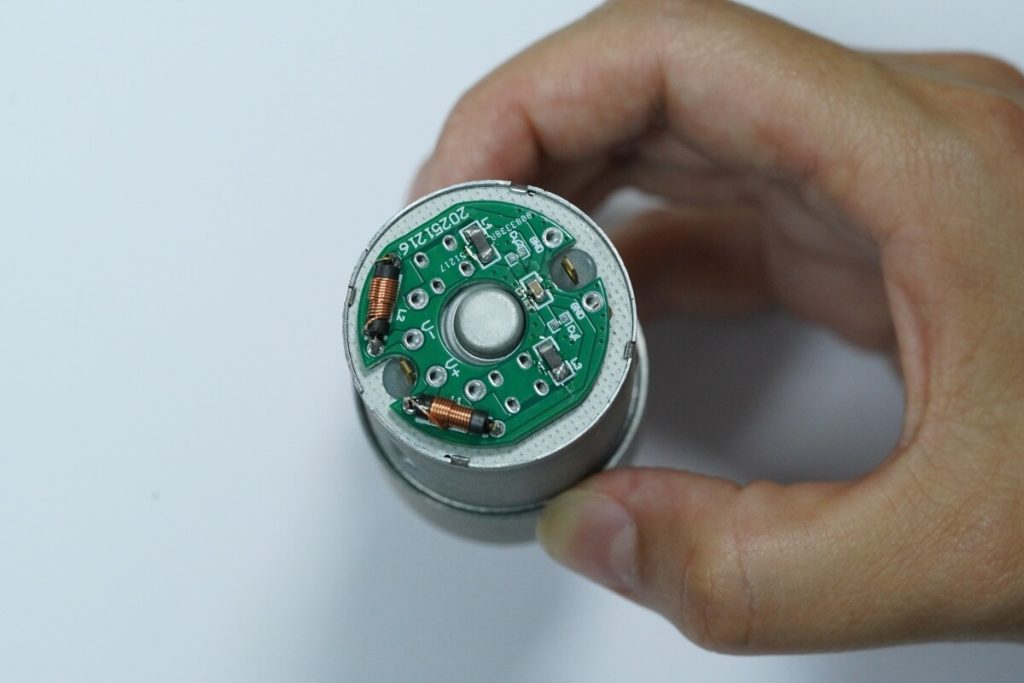
Encoders and sensors enhance motor precision by translating physical shaft rotation into digital pulses, allowing the controller to calculate exact position, speed, and acceleration. Integrating an encoder with a compact dc gear motor transforms a basic continuous rotator into a highly controllable drive system. This feedback mechanism is critical for ensuring that your automated machinery operates within strict positional tolerances.
What is the role of optical encoders?
Think about this: optical encoders use a slotted disk and light sensor to detect movement with extreme resolution. As the disk spins, it interrupts the light beam, generating thousands of pulses per revolution. This high-density data allows the control board to make micro-adjustments to the motor’s input current.
Why choose magnetic Hall sensors?
Magnetic Hall sensors are the preferred choice for harsh industrial environments where dust, grease, or moisture would block optical sensors. They detect changes in the magnetic field as a target magnet rotates on the motor shaft. This non-contact sensing method ensures long-term reliability and zero maintenance in demanding conditions.
- Optical Encoders: High resolution, sensitive to dirt and moisture.
- Hall Effect Sensors: Durable, dust-resistant, ideal for harsh spaces.
- Absolute Encoders: Retain position data even during power loss.
Key Takeaway: Adding encoder feedback to miniature motors bridges the gap between low-cost DC drives and high-end servo performance.
| Sensor Type | Resolution Level | Environmental Resistance | Cost Impact | |
|---|---|---|---|---|
| Optical Encoder | Extremely High | Low (Sensitive to dust) | Moderate | |
| Hall Sensor | Medium | High (Dust and waterproof) | Low | |
| Resolver | High | Very High (Vibration proof) | High |
Analysis Guidance: Evaluate your working environment’s cleanliness to select the appropriate sensor feedback technology.
How do gearboxes improve miniature DC gear motor torque?
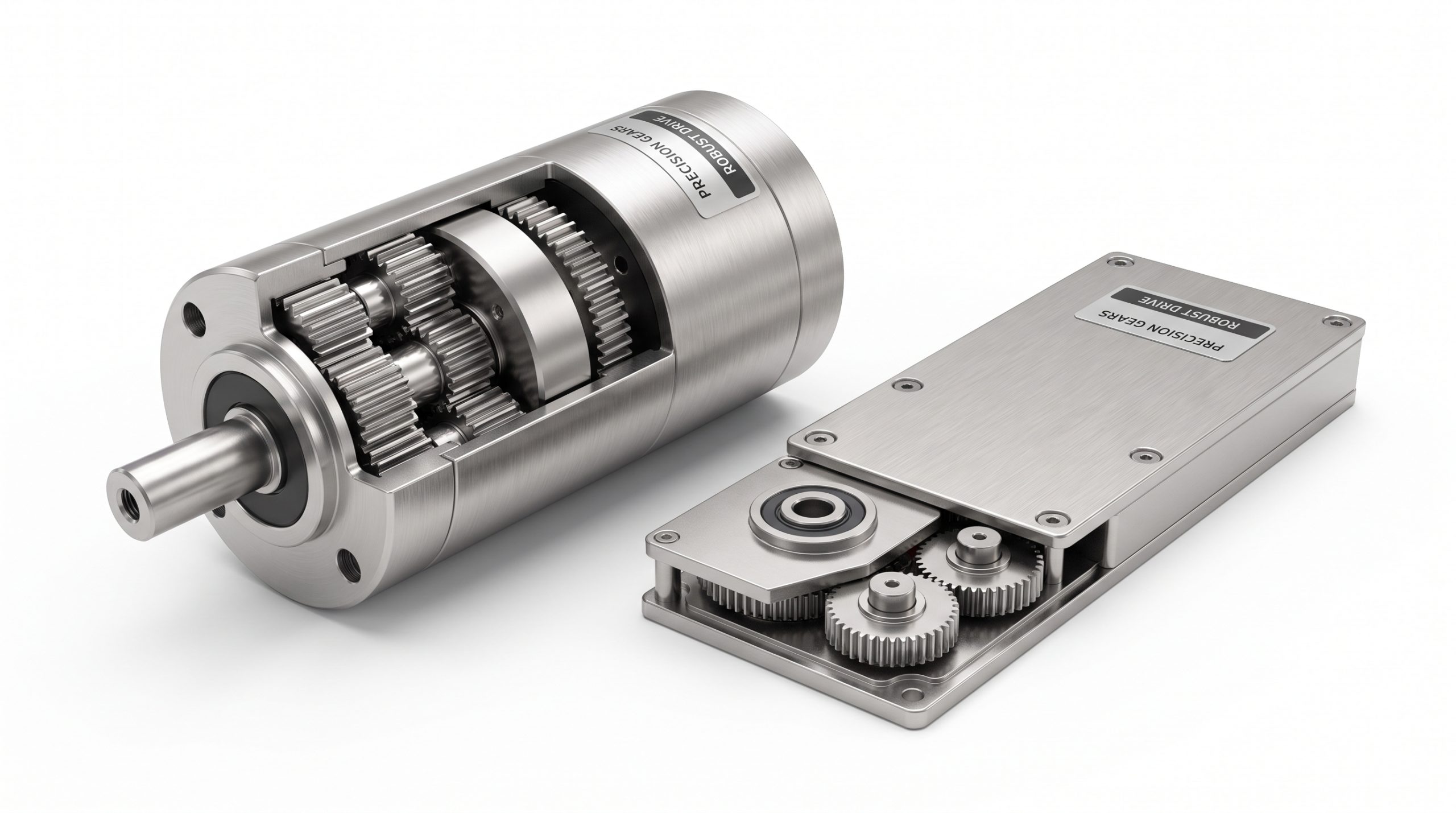
Gearboxes improve miniature DC motor torque by reducing the output shaft speed through a structured gear ratio, which multiplies rotational force according to mechanical principles. Equitting a premium dc gear motor with a planetary, worm, or spur gearbox allows a tiny motor to drive surprisingly heavy industrial loads. This integration is essential for modern compact B2B designs where space is limited but mechanical torque demands are high.
Why are planetary gearboxes superior?
But that’s not all: planetary gearboxes distribute the mechanical load across multiple planet gears, providing the highest torque density available. This coaxial design ensures smooth power transmission and minimizes backlash in precision positioning systems. Consequently, they are the gold standard for high-torque, compact industrial machinery.
When should you use flat gearboxes?
Flat and worm gearboxes are ideal when your physical cabinet space has narrow depth constraints and requires right-angle power transmission. Worm gearboxes also provide a self-locking feature, which prevents the load from back-driving when power is shut off. This built-in mechanical safety is highly valuable for vertical elevator or hoist applications.
- Planetary Gears: High efficiency, exceptional torque density, low backlash.
- Spur Gears: Simple, cost-effective, best for low-torque light duties.
- Worm Gears: Right-angle output, self-locking safety, compact depth.
Key Takeaway: Choosing the right gearbox geometry allows you to maximize output torque while keeping your machine footprint as small as possible.
| Gearbox Type | Efficiency Range | Torque Capacity | Backlash Level | |
|---|---|---|---|---|
| Planetary | 90% – 95% | Extremely High | Low to Moderate | |
| Spur | 60% – 85% | Moderate | High | |
| Worm | 50% – 75% | High (Self-locking) | Low |
Analysis Guidance: Analyze your space limitations and torque needs to determine the correct gearbox style.
How do you select the right motor for your specific B2B project?
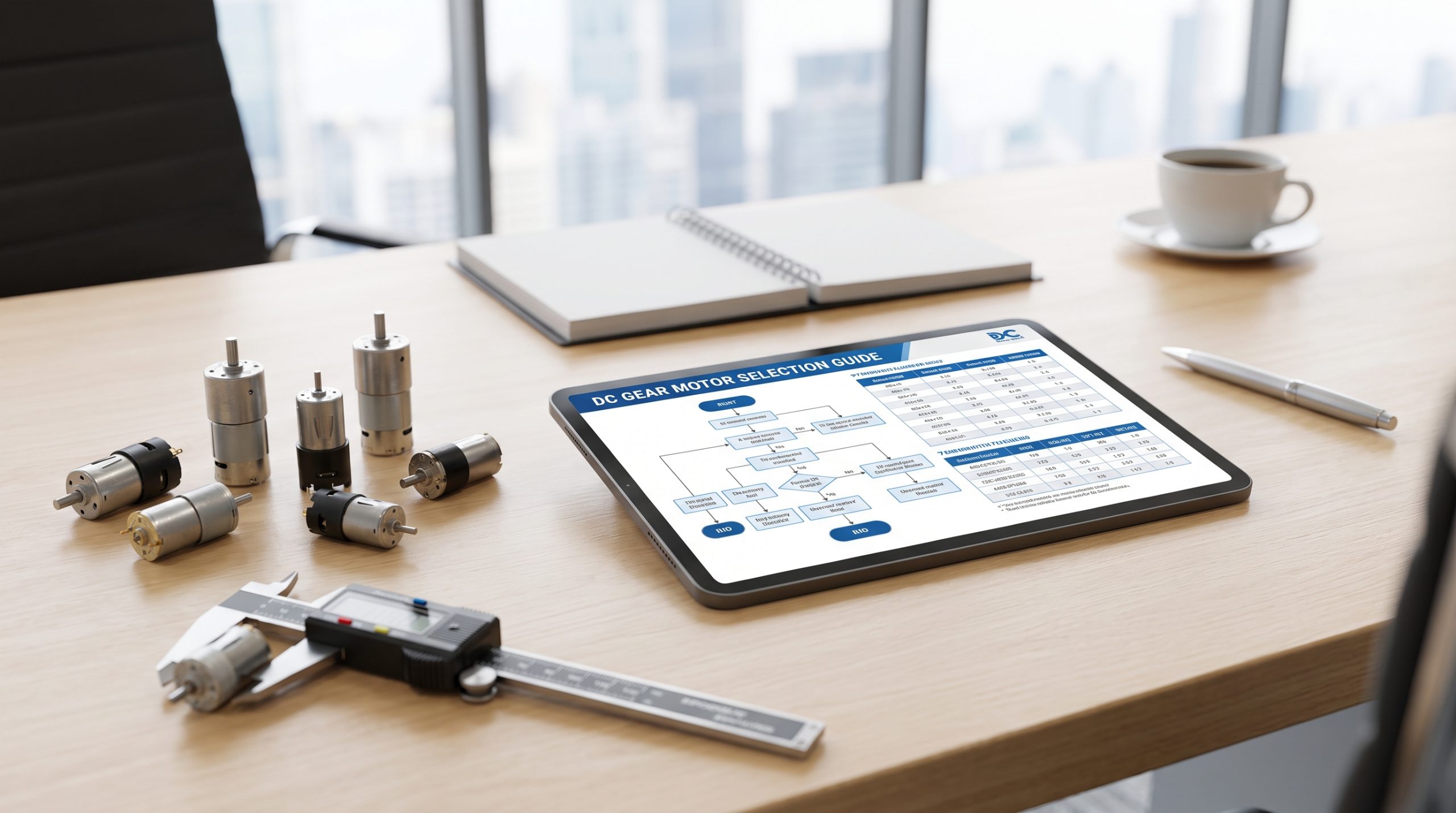
To select the right motor for your B2B project, you must systematically analyze your application’s physical space, peak torque, required operational speed, and positional accuracy parameters. If your task requires continuous rotation under steady load, a standard dc gear motor is the most reliable and economical choice. However, if your machine requires high-precision hold-and-release mechanics, a stepper or closed-loop servo motor is necessary.
What are critical mechanical variables?
Consider this: neglecting to calculate the moment of inertia can lead to premature motor failure and system instability. You must also evaluate physical shaft loads, including radial and axial forces, to prevent mechanical binding. Over-specifying your motor increases costs, while under-specifying leads to constant operational errors.
How do control protocols affect selection?
Your existing control infrastructure also dictates your motor selection, as stepper and servo systems require specific drive electronics. Steppers need step/direction signals, whereas servos communicate over advanced protocols like EtherCAT or CANopen. Choosing a motor that aligns with your PLC architecture ensures rapid integration and lowers engineering costs.
- Continuous Speed: Best matched with miniature DC gear systems.
- Incremental Steps: Ideal for precise stepper motor control.
- Dynamic Feedback: Requires high-performance closed-loop servo systems.
Key Takeaway: Aligning physical motor capabilities with your control hardware during the design phase avoids costly retrofits during production.
| Selection Criteria | DC Gear Motor | Stepper Motor | Servo Motor | |
|---|---|---|---|---|
| Speed Capacity | High | Low to Medium | Very High | |
| Position Accuracy | Low (Without encoder) | High (Open-Loop) | Extremely High | |
| Budget Impact | Low | Medium | High |
Analysis Guidance: Use this selection matrix as a starting point to filter down your drive system options.
Why is partnering with a reliable B2B motor manufacturer critical?
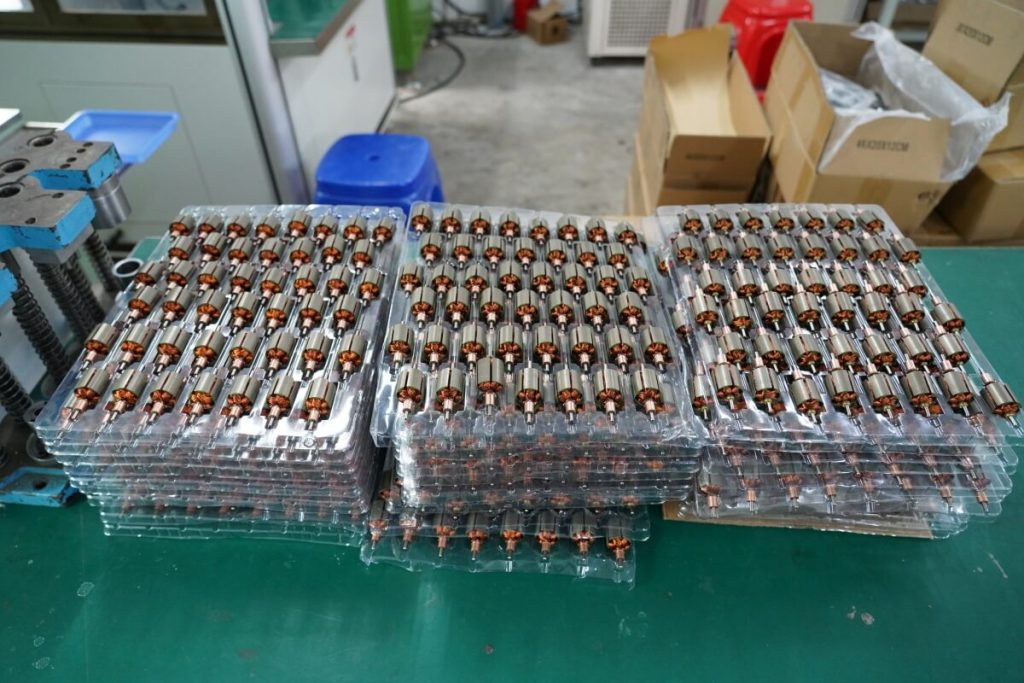
Partnering with a reliable B2B motor manufacturer is critical because it guarantees consistent component quality, reliable supply chains, and specialized engineering support to customize motors for your precise needs. Working with a dedicated provider of miniature dc gear motor solutions ensures your assembly line never faces costly production delays due to component defects. A direct manufacturing relationship also grants you access to custom gear ratios, customized shafts, and optimized winding configurations.
How does customization reduce costs?
Here is why this matters: off-the-shelf motors rarely fit the exact mechanical tolerances of highly specialized B2B machinery. A custom-engineered shaft or mounting flange eliminates the need for expensive mechanical adapters in your final design. This streamlined integration directly reduces your overall bill of materials and assembly labor hours.
Why is batch-to-batch consistency vital?
Batch-to-batch consistency is the cornerstone of high-volume industrial manufacturing where minor component variations can disrupt automated assembly lines. A certified B2B manufacturer utilizes strict quality control systems to ensure every single motor performs identically. This rigorous testing minimizes your field failure rates and protects your corporate brand reputation.
- Custom Winding: Matches voltage and current to your specific power supply.
- Certified QA: Ensures strict physical and electrical tolerances across batches.
- Engineering Support: Provides direct access to technical design consultation.
Key Takeaway & CTA: Establishing a direct manufacturing partnership secures your supply chain and provides tailored drive solutions that enhance product value. If you are ready to elevate your product performance with high-quality planetary gearboxes, flat gearboxes, or custom brushless drives, contact us today to discuss your technical specifications with our engineering team.
| Partnership Value | Off-the-Shelf Retailer | Direct B2B Manufacturer | |
|---|---|---|---|
| Customization | None (Standard only) | Full mechanical & electrical | |
| Quality Assurance | Spot checks only | 100% factory batch testing | |
| Supply Chain | Subject to retail stock | Guaranteed scheduled shipments |
Analysis Guidance: Evaluate your long-term volume needs to determine the value of a factory-direct partnership.
Frequently Asked Questions
- Can I use a DC gear motor for high-precision positioning?
- No, standard DC gear motors are designed for continuous rotation and cannot achieve precision positioning without an external encoder. However, adding a Hall sensor encoder to your gear motor allows you to track rotation and achieve high-precision closed-loop control. For pure open-loop indexing, a stepper motor remains the more cost-effective choice.
- What’s the best motor type for a robotic arm joint?
- Servo motors are the undisputed best choice for robotic joints due to their high speed, high dynamic torque, and closed-loop feedback. They allow the controller to constantly adjust for changing load inertia as the arm moves through space. This ensures the robot operates safely and accurately without losing steps.
- How do I know if I need a planetary or a spur gearbox?
- You should choose a planetary gearbox if your application requires high torque density and low backlash in a compact space. Spur gearboxes are much simpler and cheaper but are limited to low-torque, lighter-duty industrial applications. Analyzing your physical space and torque requirements will clarify which option fits.
- Can I run a stepper motor at high speeds continuously?
- No, stepper motors are structurally optimized for low-speed positioning and lose torque rapidly as rotational speed increases. Running them at high speeds often causes them to stall or miss steps due to high winding impedance. If your project requires high-speed continuous motion, you should select a DC or servo drive instead.
- How do I know if my project requires brushless technology?
- You require brushless technology if your application demands continuous, maintenance-free operation, high thermal efficiency, or runs in spark-sensitive environments. Since brushless motors lack mechanical contacts, they do not wear out or generate electrical noise like brushed alternatives. However, brushed motors are still suitable for simple, low-cost, intermittent tasks.