
A gear motor is an electric motor combined with a gearbox to reduce rotational speed and multiply torque. Engineers often struggle to find compact power solutions that deliver enough force without taking up excessive physical space. Failing to balance power and size leads to bulky product designs, inefficient battery consumption, and frequent mechanical failures in the field. Integrating a highly efficient gear motor solves this problem by providing precise, concentrated mechanical power exactly where your application needs it.
What Exactly Is a Miniature Gear Motor?
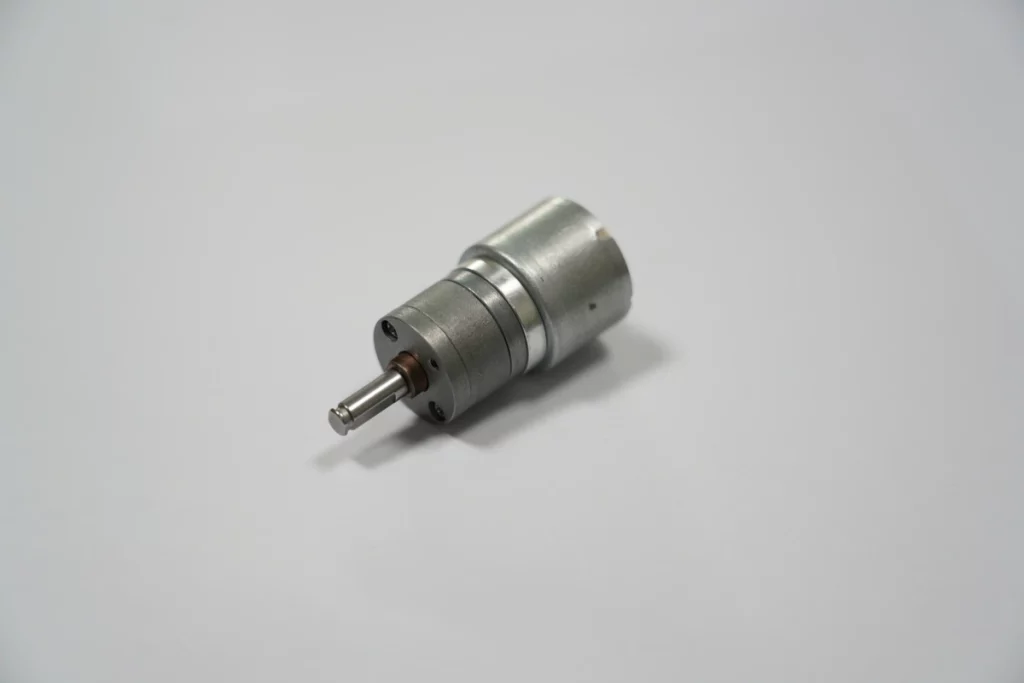
A miniature gear motor is a highly compact electromechanical device that couples a small DC motor with a precision reduction gearbox. Every gear motor is explicitly engineered to transform high-speed, low-torque motor rotation into lower-speed, higher-torque output suitable for tight spaces. This makes them the backbone of modern miniaturized automation systems.
Why Size Matters in Modern Design?
Shrinking technology demands internal components that pack a massive punch without adding unnecessary bulk.
- It allows for the creation of sleek, highly portable consumer electronics.
- It significantly reduces overall weight in critical aerospace and drone applications.
- It minimizes power consumption profiles in battery-operated medical devices.
How Do Micro Gears Multiply Force?
Through precise mechanical advantage, miniature gearboxes convert raw rotational speed into focused pushing or pulling power. The carefully calculated ratio of gear teeth systematically trades velocity for strength.
Key Takeaway: Specifying a miniature gear motor allows engineering teams to achieve maximum torque in minimal space, driving innovation in portable and compact B2B applications worldwide.
| Feature | Standard Motor | Miniature Gear Motor | |
|---|---|---|---|
| Torque Output | Low | High | |
| Space Required | Large | Minimal | |
| Speed (RPM) | High | Controlled/Low |
Evaluating torque density helps determine the optimal form factor for your specific engineering and product constraints.
How Does a Mini DC Gear Motor Work?
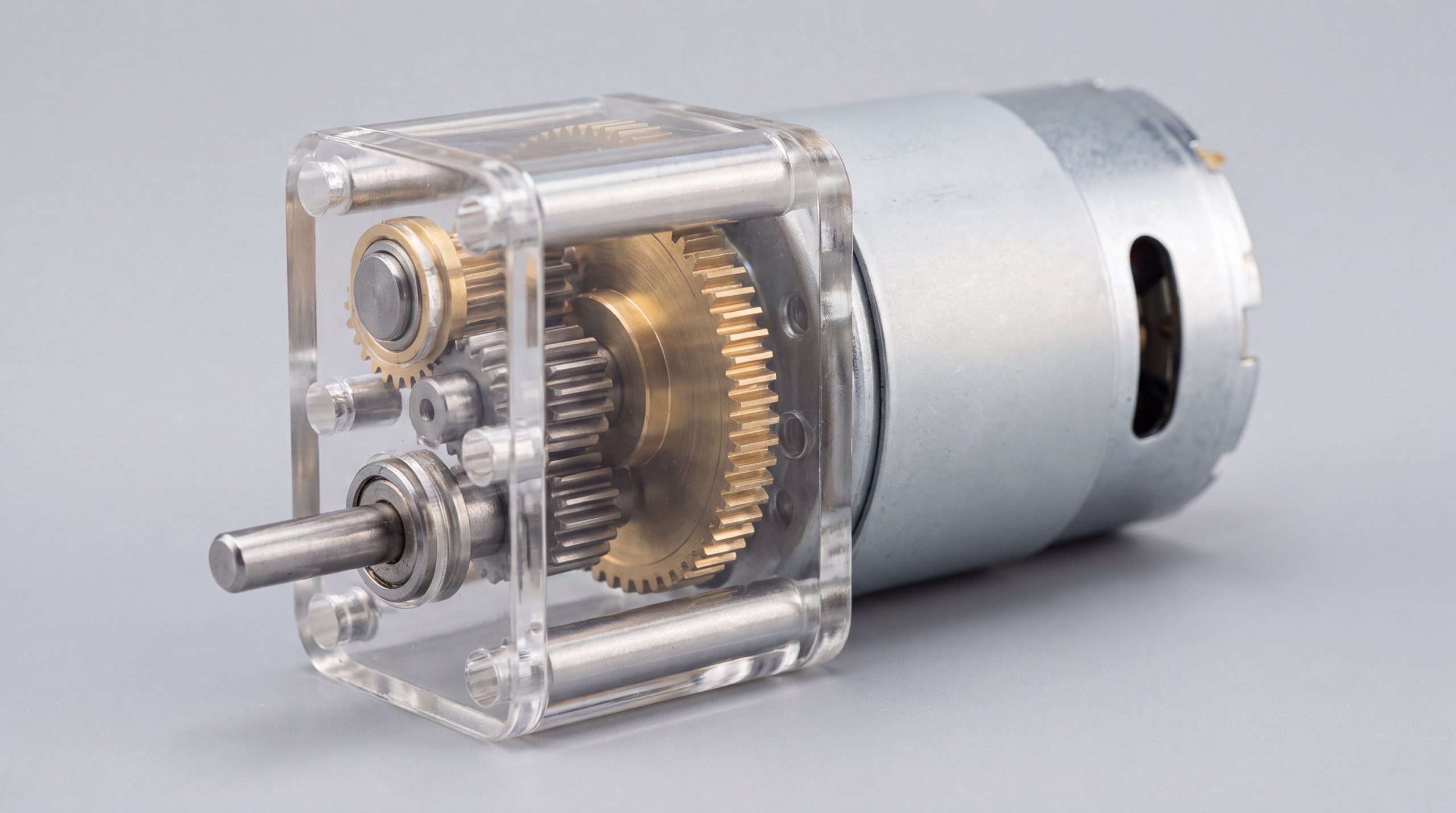
A mini DC gear motor works by passing electrical current through a motor armature, which spins a primary shaft that drives a series of interconnected gears. This fundamental process makes the gear motor an essential mechanism for reliably regulating speed and amplifying force in commercial and industrial applications. As the gears mesh, they safely transfer the kinetic energy to the final output shaft.
What Happens Inside the Gearbox?
The internal gear ratios absolutely dictate your final output capabilities and load thresholds. The motor’s pinion gear engages larger gears, systematically reducing the rotational speed at each progressive stage.
- High-speed input is converted smoothly step-by-step.
- Output torque increases proportionally as rotational speed decreases.
- Mechanical load stress is distributed safely across multiple gear teeth.
Controlling Speed and Direction
By simply reversing the DC voltage polarity, the rotational direction of the motor shaft changes instantly. Adjusting the input voltage levels also allows for highly responsive variable speed control.
Key Takeaway: Understanding the internal mechanics of a mini DC gear motor ensures you select the correct gear ratio and voltage for precise, reliable mechanical control over your application.
| Gear Stages | Speed Output | Torque Output | |
|---|---|---|---|
| Single Stage | Moderate | Moderate | |
| Dual Stage | Low | High | |
| Multi-Stage | Very Low | Extreme |
Selecting the right number of reduction stages is critical for balancing desired output speed with necessary operational torque.
How Do You Measure Gear Motor Performance?
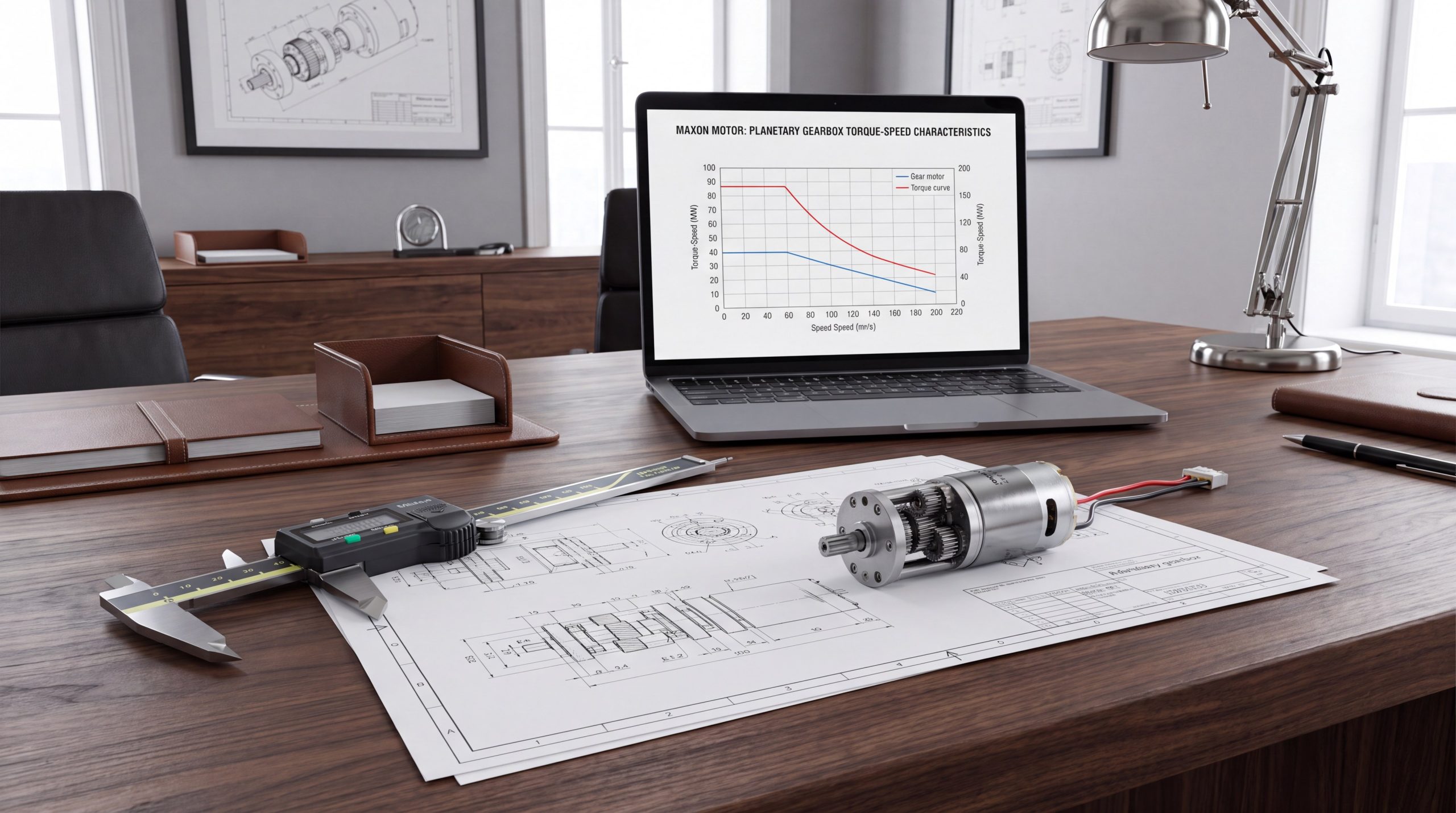
You measure gear motor performance by calculating its torque output, rotational speed (RPM), and overall electrical efficiency under a specific load. Every high-quality gear motor undergoes rigorous dynamometer testing to generate performance curves that validate these critical specifications. Analyzing these metrics ensures the unit will survive real-world operational stresses.
Reading Torque and Speed Curves
Operating any motor outside its optimal efficiency zone leads to rapid overheating and premature system failure.
- Stall torque defines the absolute maximum load capacity before the motor stops.
- No-load speed indicates the fastest possible rotation without any physical resistance.
- Rated torque shows the ideal, continuous operating point for maximum lifespan.
Why Is Efficiency Crucial?
High efficiency means less electrical power is wasted as thermal heat generation. This directly extends both the motor’s mechanical lifespan and the host system’s battery life.
Key Takeaway: Accurately measuring and matching a gear motor’s performance curve to your application’s specific load prevents catastrophic system failures and optimizes long-term reliability.
| Metric | Definition | Impact on Design | |
|---|---|---|---|
| RPM | Rotations per minute | Determines operation speed | |
| Stall Torque | Max force before stopping | Defines safety limits | |
| Efficiency % | Power in vs power out | Affects battery/heat |
Analyzing the performance curve data ensures your application remains within safe thermal and mechanical operational limits.
What Are the Core Benefits of Gear Motors?
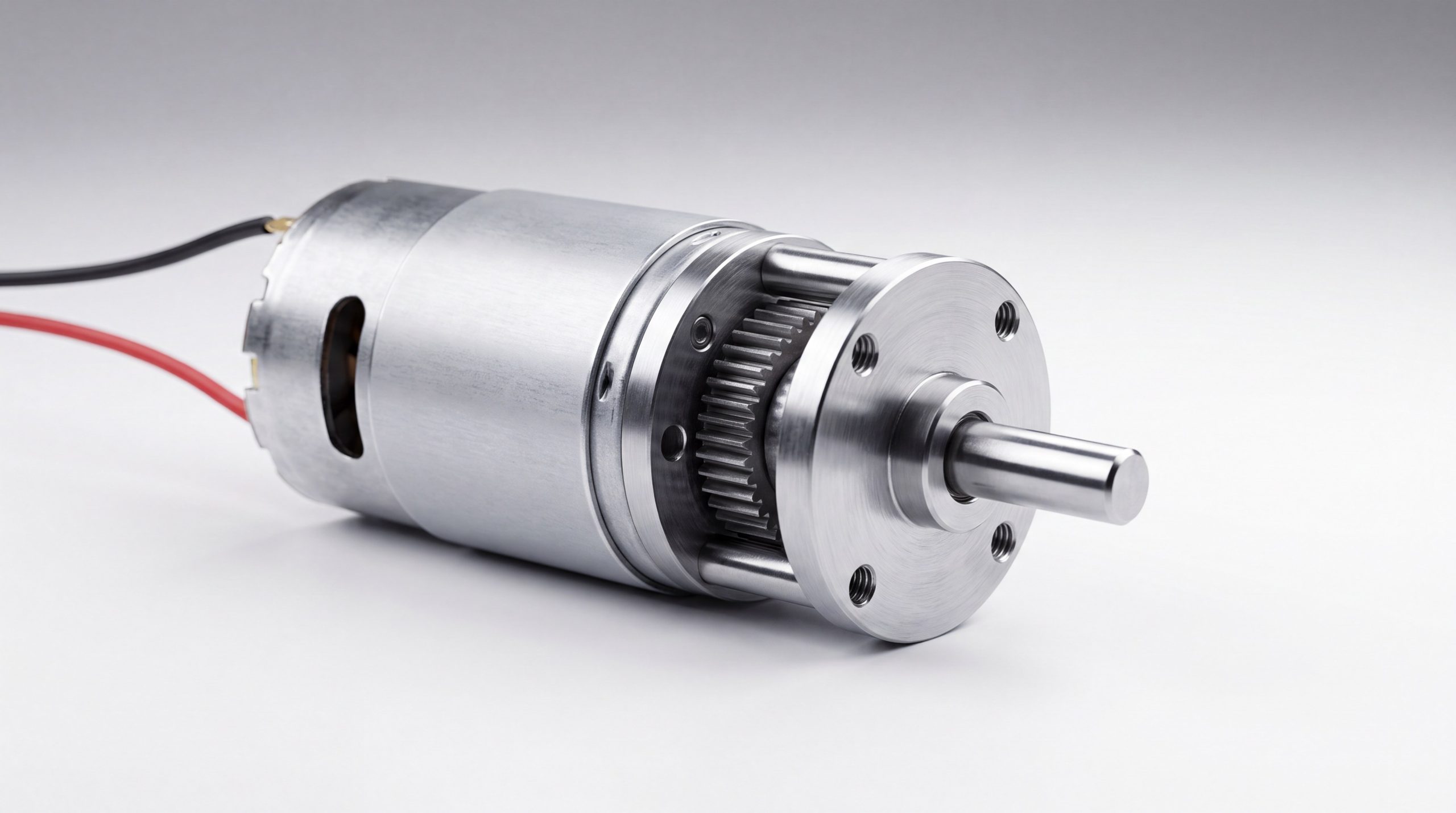
The core benefits of gear motors include exceptional torque multiplication, precise speed reduction, and highly compact, easy-to-install form factors. Integrating a custom gear motor streamlines your entire mechanical design by eliminating the need for external pulleys, belts, or complex secondary drive trains. This all-in-one approach fundamentally changes how engineers approach product architecture.
Cost-Effective Power Solutions
Integrated gear systems dramatically reduce manufacturing complexities and assembly costs for B2B OEMs.
- They lower the total bill of materials (BOM) by reducing part counts.
- They drastically reduce manual assembly time on the production floor.
- They minimize ongoing maintenance requirements over the product’s lifecycle.
Can They Improve System Reliability?
Because the motor and gearbox are engineered as a sealed, cohesive unit, they are far less susceptible to dust and environmental contamination. This enclosed design inherently protects delicate internal teeth from external debris.
Key Takeaway: The primary advantage of a gear motor is its unique ability to deliver cost-effective, highly reliable, and space-saving torque without relying on fragile external mechanical linkages.
| Benefit Area | Traditional Drive | Integrated Gear Motor | |
|---|---|---|---|
| Assembly | Complex | Plug-and-play | |
| Footprint | Large/Bulky | Compact/Streamlined | |
| Maintenance | High | Very Low |
Consolidating complex drive components into a single enclosed unit significantly boosts both mechanical reliability and assembly efficiency.
How Are Precision Gear Motors Manufactured?
.jpg)
Precision gear motors are manufactured using advanced CNC machining, automated wire winding technologies, and rigorous multi-stage quality control systems. Producing a reliable gear motor requires achieving microscopic tolerances to ensure smooth gear meshing and minimal rotational backlash. Top-tier B2B manufacturers rely on sterile, highly automated environments to maintain this strict consistency.
The Role of Automated Assembly
Highly calibrated robotic arms place microscopic gears onto micro-shafts with micrometer accuracy to ensure flawless operation.
- Automated copper winding ensures perfectly consistent electromagnetic properties.
- Precision laser welding provides ultra-strong, remarkably clean component joints.
- Automated optical inspection (AOI) instantly detects microscopic structural defects.
What Are the Quality Control Steps?
Each assembled unit is heavily tested for acoustic noise, structural vibration, and accurate electrical draw before ever leaving the manufacturing floor. Burn-in tests simulate long-term usage to weed out early-life failures.
Key Takeaway: Partnering with a manufacturer that utilizes automated, high-precision assembly lines guarantees absolute consistency, durability, and performance across large-scale B2B production runs.
| Manufacturing Step | Technology Used | Quality Benefit | |
|---|---|---|---|
| Gear Cutting | Multi-axis CNC | Zero backlash | |
| Coil Winding | Robotic Winders | Electrical consistency | |
| Final Testing | Dynamometers | Performance verification |
Tightening manufacturing tolerances directly correlates to drastically reduced operational noise and substantially extended product lifespans.
Which Industries Rely on Mini Gear Motors?
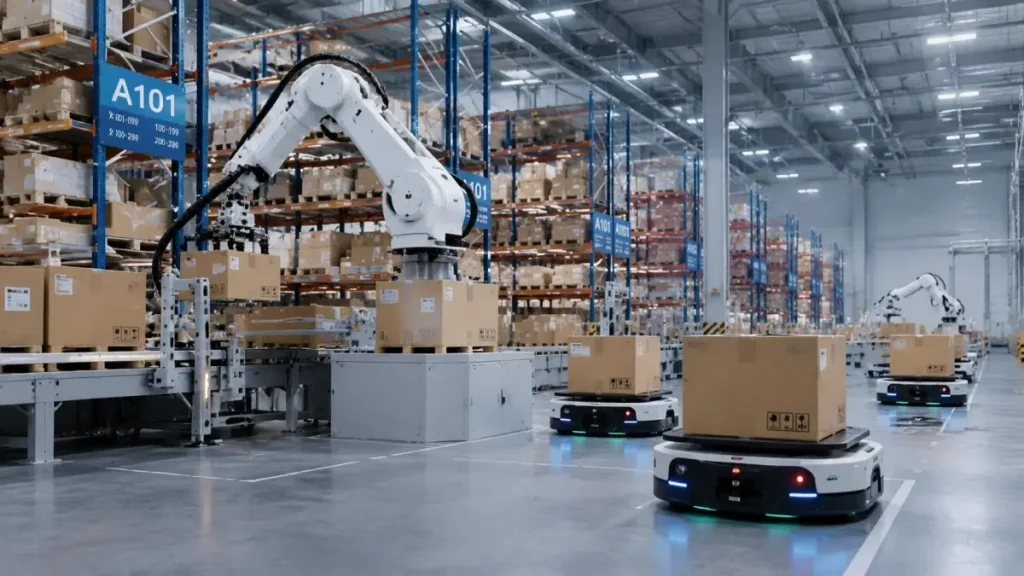
Mini gear motors are heavily relied upon by the advanced medical, industrial robotics, automotive, and smart home automation industries. In these fast-paced sectors, a specialized gear motor provides the exact, uncompromising balance of reliability and miniature sizing needed for mission-critical tasks. Without these precise actuators, modern automated infrastructure would essentially stall.
Powering Medical Devices
In modern healthcare technology, motor failure is simply not an option. Surgical tools and life-saving drug delivery systems require absolute perfection.
- Smart infusion pumps use them for exact, steady fluid delivery.
- Surgical robotic arms rely on them for steady, micro-millimeter movements.
- Automated patient mobility beds use them for smooth, whisper-quiet adjustments.
Are They Used in Industrial Robotics?
Yes, automated guided vehicles (AGVs) and complex robotic grippers depend entirely on these motors for dynamic movement and secure payload handling. They provide the grip strength needed for automated assembly lines.
Key Takeaway: A highly diverse range of advanced industries depends on miniature gear motors to automate critical processes safely, quietly, and with exceptional energy efficiency.
| Industry | Primary Application | Key Requirement | |
|---|---|---|---|
| Medical | Surgical Tools | Extreme precision | |
| Robotics | Robotic Grippers | High torque density | |
| Automotive | Power Seats/Mirrors | Durability/Cost |
Identifying the specific regulatory and mechanical demands of your industry helps in selecting the ideal motor housing and internal gear material.
What Different Gear Motor Types Exist?
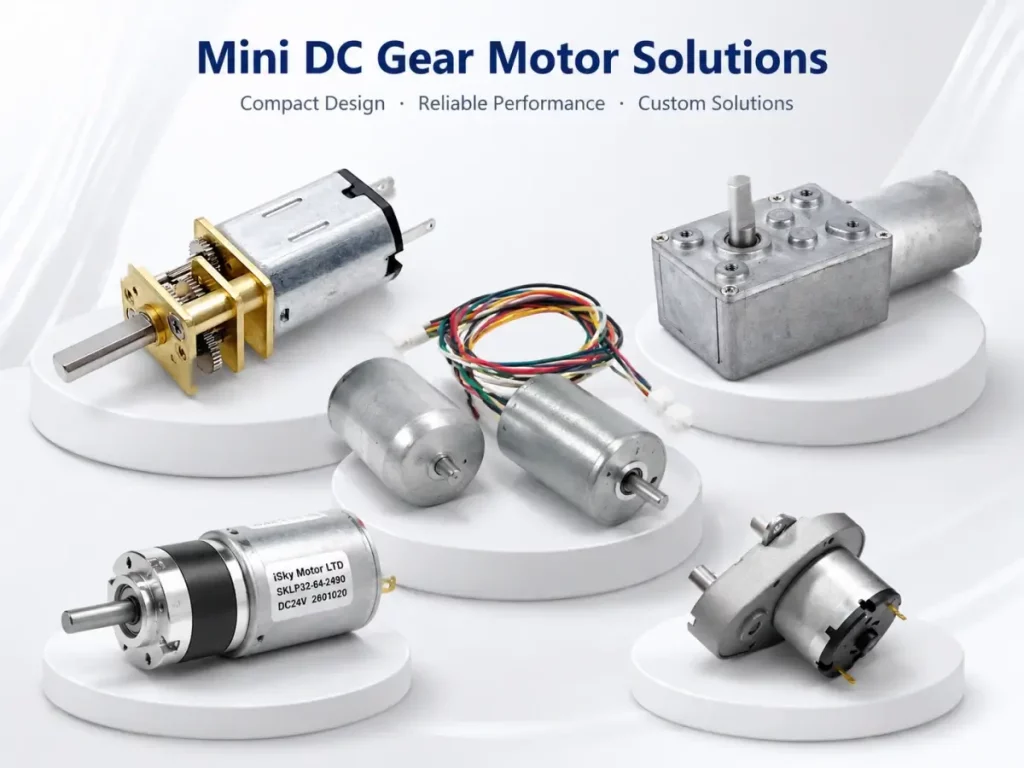
The most common types include planetary, spur, worm, and brushless flat gear motors, each offering distinct mechanical characteristics. Choosing the right gear motor type depends entirely on whether your specific application prioritizes energy efficiency, budget, spatial constraints, or noise reduction. Matching the architecture to the task is step one in product design.
Planetary vs. Spur Gearboxes
Planetary designs share the physical load across multiple gears simultaneously, while standard spur designs rely on a single, vulnerable point of contact.
- Planetary motors offer significantly higher torque in a compact cylindrical footprint.
- Spur gear motors are generally more cost-effective for simple, low-stress tasks.
- Planetary systems inherently feature superior mechanical efficiency and durability.
When Should You Use a Worm Gear?
Worm gears are absolutely ideal when you need a 90-degree output shaft and built-in self-locking capabilities to prevent loads from back-driving. This is crucial for lifting mechanisms.
Key Takeaway: Deeply knowing the structural differences between planetary, spur, and worm designs is essential for perfectly matching the motor to your spatial and heavy load requirements.
| Gear Type | Best Feature | Common Drawback | |
|---|---|---|---|
| Planetary | Highest torque density | Higher cost | |
| Spur | Budget-friendly | Lower load capacity | |
| Worm | Self-locking capability | Lower efficiency |
Evaluating expected load distribution and internal spatial constraints will quickly narrow down the best gearbox architecture for your project.
What Key Parts Form a Modern Gear Motor?
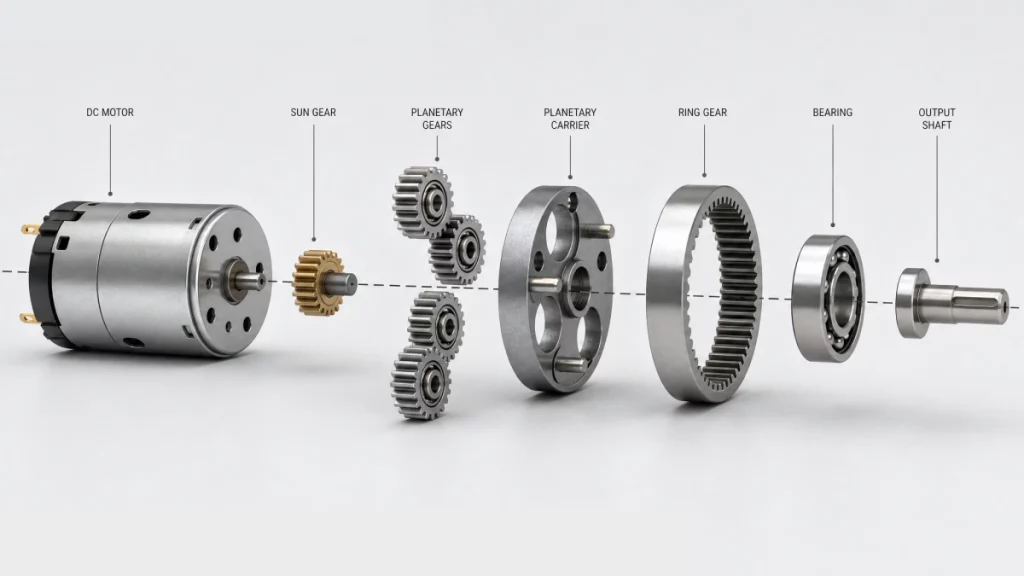
A modern gear motor consists of a primary DC motor, a structurally reinforced gear train, internal brushes (or brushless controllers), and an outer protective housing. Every single component within a gear motor must work in perfect mechanical harmony to transfer raw electrical energy into highly controlled mechanical force. A failure in one part compromises the entire system.
The Heart of the Motor
The rotor, stator, and commutator form the essential electromagnetic core that generates the initial, high-speed rotation.
- The armature is densely wound with high-conductivity copper wire.
- High-grade permanent magnets provide a incredibly strong, stable stator field.
- Precision ball bearings support the rotating shaft to minimize friction and heat.
What Makes Up the Gearhead?
The robust gearhead contains carefully machined pinions and carrier plates that handle the actual speed reduction and torque multiplication processes. Lubrication within this casing keeps everything moving smoothly.
Key Takeaway: The ultimate reliability of a gear motor is strictly determined by the quality of its individual internal components, from the pure copper windings to the precisely machined gear teeth.
| Component | Primary Function | Material Example | |
|---|---|---|---|
| Armature | Generates magnetic field | Copper wire/Steel | |
| Gear Train | Multiplies torque | Sintered metal/Brass | |
| Bearings | Reduces shaft friction | Stainless steel |
Upgrading individual materials, such as moving from molded plastic to hardened steel gears, dramatically impacts the system’s overall heavy load capacity.
Why Choose Gear Motors Over Direct Drive?
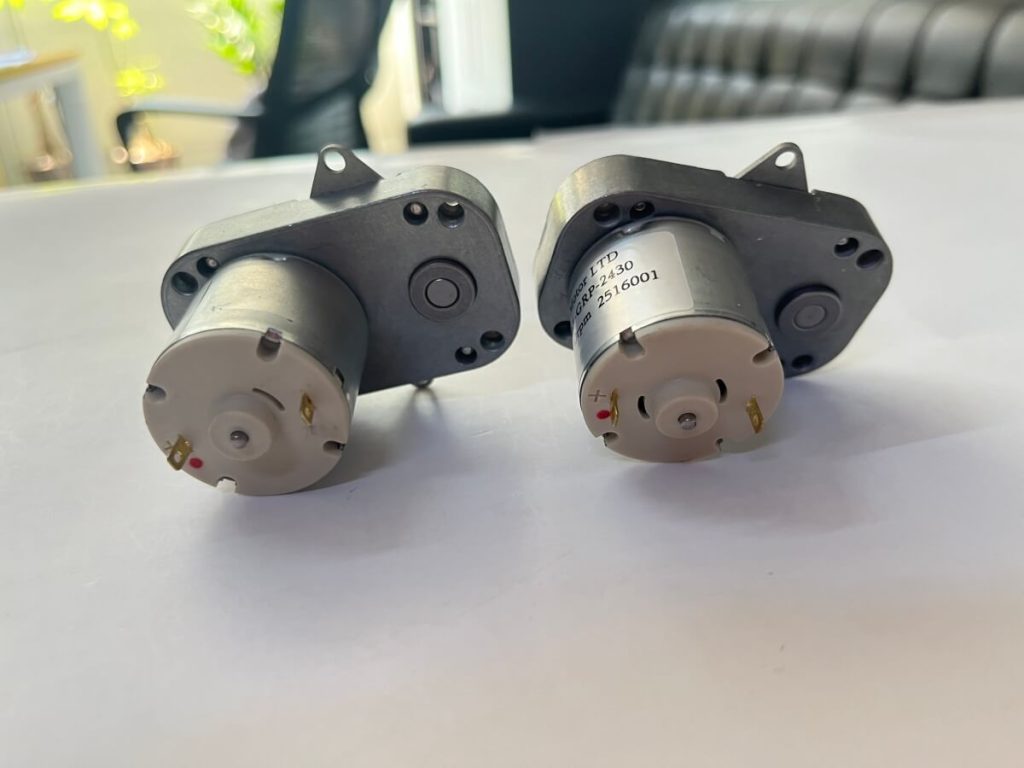
You choose gear motors over direct drive systems because they deliver significantly higher torque at low speeds without requiring massive amounts of electrical current. Using a standard gear motor allows you to achieve the exact same mechanical force using a fraction of the physical space of a direct-drive alternative. This is a game-changer for portable B2B equipment.
The Problem with Direct Drive
Trying to get high torque at low RPMs from a standard direct drive motor causes massive current draw and rapid, dangerous overheating.
- Direct drive motors require much larger outer diameters to generate high torque.
- They consume precious battery power incredibly quickly under heavy physical loads.
- They struggle immensely to maintain stable, jitter-free speeds at very low RPMs.
How Gear Reduction Solves This?
Mechanical gearing allows the DC motor to spin freely at its high-speed, high-efficiency sweet spot while the output shaft simultaneously delivers slow, incredibly powerful movement.
Key Takeaway: Engineered gear motors are clearly the superior choice when your specific application demands a rigorous combination of low-speed precision, high force, and strict space limitations.
| Feature | Direct Drive | Gear Motor | |
|---|---|---|---|
| Low Speed Torque | Poor/Inefficient | Excellent | |
| Current Draw | High | Low/Optimized | |
| Physical Size | Large | Very Compact |
Reviewing baseline torque-to-volume ratios clearly demonstrates exactly why geared systems completely dominate compact industrial applications today.
How Do Gear Motors Power Smart Homes?

Gear motors power smart homes by driving the automated mechanisms hidden inside smart locks, motorized window blinds, and robotic vacuum cleaners. A quiet, highly efficient gear motor is the invisible muscle that makes modern residential automation both completely seamless and consistently reliable. Without them, remote-controlled physical movement would be impossible.
Automating Security and Comfort
Cevery single time they press a button.
- Electronic smart locks require high-torque bursts to turn heavy metal deadbolts.
- Automated motorized blinds need smooth, quiet continuous operation to avoid disturbance.
- Home security cameras use precise micro motors for smooth, accurate pan-and-tilt tracking.
Why Low Noise Is Critical?
In luxury residential environments, acoustic performance is judged just as harshly as mechanical performance, making precision-cut gears absolutely essential to prevent grinding noises.
Key Takeaway: The rapid, ongoing growth of the smart home automation industry is directly enabled by the exceptionally quiet, battery-efficient, and high-torque capabilities of miniature gear motors.
| Smart Device | Motor Function | Vital Metric | |
|---|---|---|---|
| Smart Lock | Turning deadbolt | High peak torque | |
| Window Blinds | Lifting heavy fabric | Low acoustic noise | |
| Robot Vacuum | Driving wheels/brushes | High efficiency |
Prioritizing rigorous acoustic testing during the initial motor selection process is absolutely vital for the success of consumer-facing automation products.
Finding the perfect power transmission solution is critical to your final product’s market success and long-term mechanical longevity. Whether you are actively developing advanced medical robotics or next-generation smart home devices, precision B2B engineering makes all the difference in the world. To partner with an industry-leading manufacturer of premium mini DC motors and gearboxes, contact us today to discuss your custom specifications.
Frequently Asked Questions
Can I use a standard DC motor instead of a geared one?No, unless your application requires very high speed and extremely low torque. A standard motor will quickly overheat and ultimately stall if it is forced to move heavy loads without a gearbox attached.
What’s the best way to reduce noise in my motorized product?The most effective method is utilizing advanced planetary gearboxes equipped with precision-machined helical gears. High-quality synthetic lubrication and exact manufacturing tolerances also significantly dampen internal acoustic vibrations.
How do I know if I need a brushless or brushed motor?It depends entirely on your required product lifespan and strict budget constraints. Brushless motors offer significantly longer lifespans and better efficiency, while traditional brushed motors remain much more cost-effective for simpler tasks.
Can I stall a gear motor without damaging it?No, continuous stalling will cause catastrophic mechanical failure to both the gear teeth and the internal motor windings. You should always implement smart current-limiting circuitry or mechanical slip clutches to prevent expensive stall damage.
Will a higher voltage make my motor stronger?Yes, but it comes at the high cost of increased heat generation and severely reduced component life. It is much safer and more efficient to achieve higher torque by selecting a motor with a higher gear reduction ratio instead of over-volting the system.